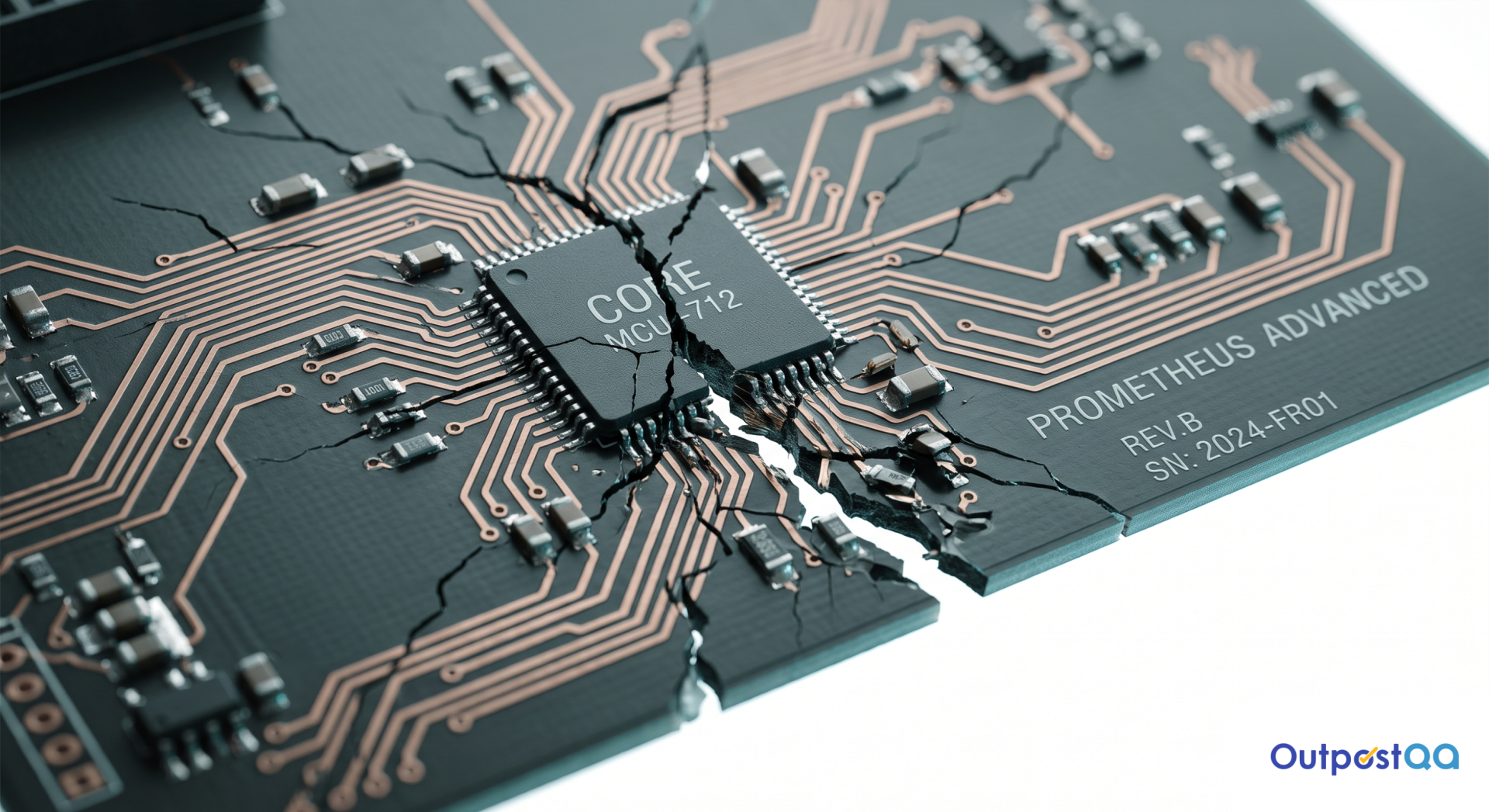

Anthropic launched the Model Hardware Standard (MHS) research preview on August 27, 2026. Coverage since then has focused on what Model Hardware Standard Claude agents can now do: control microscopes, robotic arms, liquid handlers, and quantum calibration equipment with minimal setup. What that coverage hasn’t addressed is the question that lands on every QA Director’s desk the moment their engineering team starts a deployment: who validates the agent’s behavior when it’s the one operating the hardware?
TL;DR
- Anthropic’s Model Hardware Standard lets Claude agents discover and operate physical lab and manufacturing devices through standardized drivers, reducing integration time from weeks to hours, per Anthropic’s official announcement.
- MHS creates a testing surface that combines AI agent logic, standardized drivers, and physical hardware behavior, none of which existing QA methodologies were designed to cover as a unified system.
- Error recovery without human intervention is a stated MHS capability; validating that recovery logic is a QA responsibility that has no established playbook yet.
- Three structural gaps appear consistently in early MHS deployments: unvalidated agent decision trees, untested driver update regression paths, and safety evaluations treated as documentation rather than structured test deliverables.
- CI/CD pipelines that include physical hardware require purpose-built gating strategies for firmware and agent updates, separate from the software-only gates teams already use.
What the Model Hardware Standard Actually Does for Claude Agents
MHS is a shared specification. It lets AI agents interface with physical devices through a common protocol, rather than through custom per-device integration code written by hardware specialists.
Standardized Drivers Replace Bespoke Per-Device Code
Before MHS, connecting an AI system to a piece of lab equipment meant writing custom integration code for every instrument. That work required specialists and took weeks or months. It also produced integrations that broke whenever the software or hardware changed.
MHS replaces that model with standardized drivers that expose a common set of primitives, mainly read and write operations, across device types. According to Anthropic’s official MHS announcement, integration time drops from weeks or months to hours or minutes.
That’s a large shift in development speed. It’s also a large shift in the surface area QA teams are now responsible for covering.
How Claude Agents Discover and Operate Physical Instruments
An MHS-enabled Claude agent can discover available hardware on a network, select the right driver, and begin issuing commands to a device without a human writing glue code for each connection. The agent treats the instrument the way a software client treats an API: it reads the available operations, runs commands, and interprets responses.
MHS is also designed to work with the Model Context Protocol. Agents running under MCP can extend into physical environments using the same patterns they use for software tools. The agent can also operate multiple instruments at once, supporting experiments that run without constant human oversight.
Which Organizations Are Running Live Deployments Now
The MHS research preview opened first to scientific research labs and advanced manufacturers. Confirmed early deployments include Genentech, Carnegie, QuEra, and HHMI Janelia Research Campus, which co-developed the standard with Anthropic.
These aren’t proof-of-concept installations. They’re live environments where AI agents operate physical equipment as part of real research and production workflows.
The Testing Surface That Nobody Mapped Before Model Hardware Standard Claude Agents Shipped
A standard software release means validating application logic, integration points, and user-facing behavior. A firmware release adds hardware state and driver compatibility. An MHS deployment combines all of that with a third layer: the autonomous decisions of the AI agent itself.
Each layer shapes the others:
| Layer | What It Affects |
| Agent logic | Determines which commands get issued and when |
| Driver output | Shapes what the agent perceives about hardware state |
| Hardware behavior | Responds to whatever commands the agent sent |
A defect can start in any layer and show up in any other. No existing QA method was built to trace failures across that combined surface, because the surface didn’t exist in this form until now.
Per the 2024 World Quality Report by Capgemini, IoT and embedded systems testing already represents one of the fastest-growing areas of QA investment, with teams citing integration complexity as the primary challenge. MHS adds an autonomous reasoning layer on top of that problem.
When an AI Agent Recovers from a Hardware Error, Who Verified the Recovery Logic?
Anthropic’s MHS documentation describes hardware error recovery without human intervention as a core agent capability. The agent detects an error state, selects a recovery action, and continues operation.
That’s useful in research environments where human availability is limited. It’s also an untested behavior in most deployments, because no one has defined what “verified recovery logic” looks like for an AI agent controlling physical hardware.
What “Error Recovery Without Human Intervention” Requires From QA
Validating error recovery in a traditional system means defining the expected error states, triggering each one in a controlled environment, and confirming the system returns to a known good state.
For an MHS-enabled agent, the recovery path isn’t fixed in the same way. The agent reasons about the error and selects a response. That means QA needs to evaluate three things:
- Whether the reasoning path was right for the specific error class
- Whether the recovery action was safe for the hardware involved
- Whether the system’s state after recovery matches the expected baseline
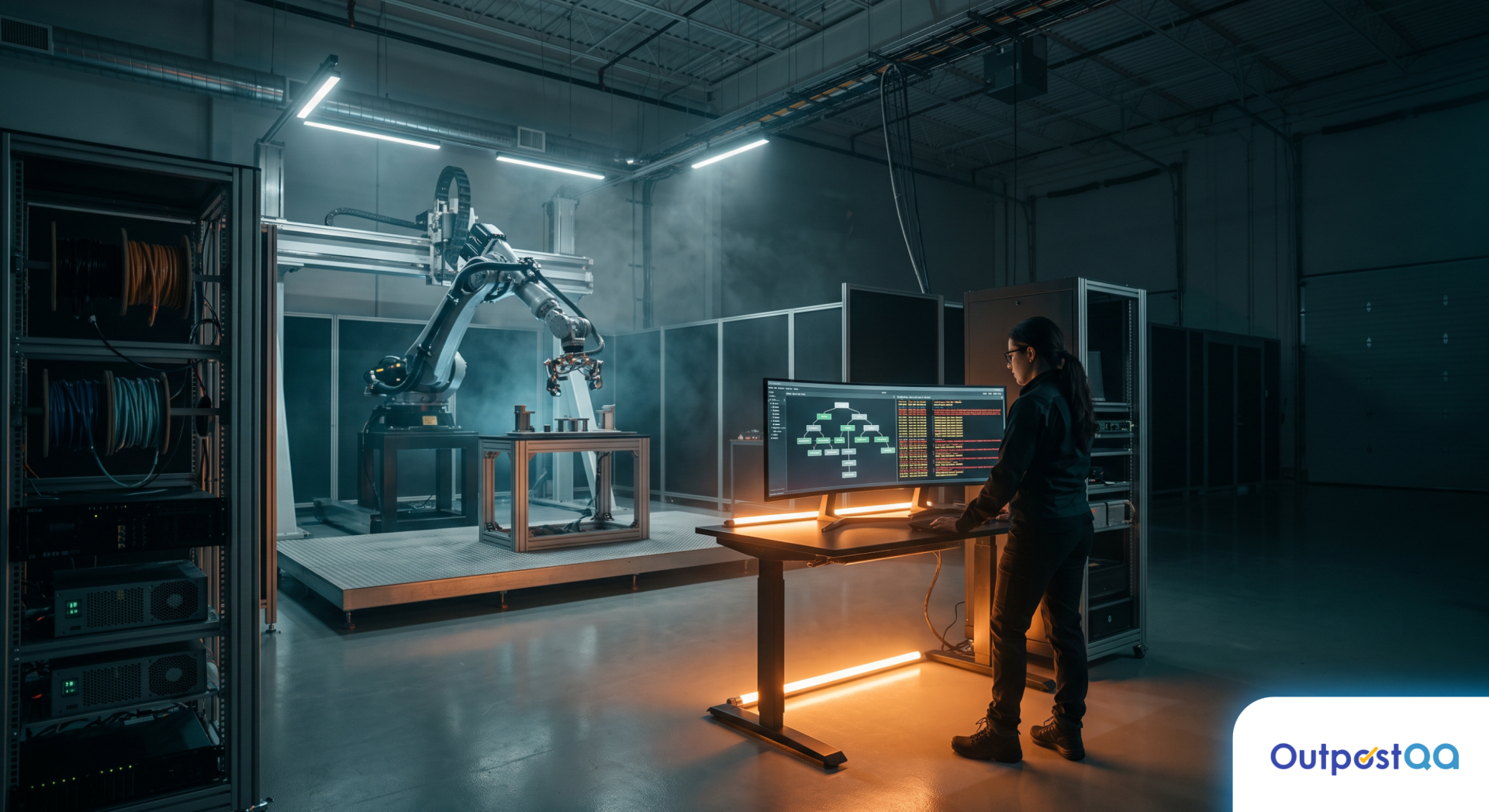
That requires scenario-based testing that exercises the agent’s decision logic under controlled fault conditions. Hardware instrumentation is needed to verify physical state throughout.
Regression Scope When the Driver or Agent Logic Changes
In a software-only pipeline, a driver update triggers a regression suite scoped to the affected integration points. In an MHS deployment, a driver update changes what the agent perceives about the hardware. That can change the agent’s decisions, which can then change the hardware’s physical state.
The regression scope isn’t bounded by the driver change alone. It extends through the agent’s full behavior tree for any workflow that touches that driver.
The same problem runs in reverse. An agent model update or prompt change can alter behavior across every hardware interaction, even if the drivers and firmware are unchanged. Regression planning for MHS deployments requires treating agent updates as a first-class trigger for hardware-level regression, not just software regression.
Three Gaps That Could Appear in Every MHS Deployment Before QA Teams Notice
1. Unvalidated Agent Decision Trees for Hardware Commands
Developers building MHS integrations focus on making the connection work. The agent discovers the device, issues commands, and the hardware responds.
What doesn’t get mapped in early deployments is the full decision tree the agent follows when conditions deviate from the expected path. Which commands does the agent issue when a sensor returns an unexpected value? What does it do when a device acknowledges a command but doesn’t finish it in time? These branches exist and get exercised in production before anyone has written a test case for them.
2. No Baseline for Hardware State After Agent Operations
Software testing can compare application state before and after an operation using database snapshots, API response diffs, and log comparisons. Physical hardware state is harder to snapshot.
Early MHS deployments often have no defined baseline for what acceptable hardware state looks like after a sequence of agent operations. Without that baseline, there’s no objective way to determine whether an operation finished correctly or left the device in a degraded condition.
3. Safety Evaluations Treated as Documentation, Not Test Deliverables
Anthropic is co-developing safety evaluations with MHS partners before the standard moves toward open-source release. In practice, early deployments tend to treat those evaluations as a documentation exercise rather than a structured QA deliverable.
The evaluation exists as a written assessment. It isn’t encoded into repeatable test cases, isn’t integrated into the release gate, and isn’t re-run when agent logic or drivers change. Safety evaluations that aren’t structured as executable tests aren’t evaluations. They’re assumptions.
Where Model Hardware Standard Claude Agents Fit in a CI/CD Pipeline With Physical Hardware
Most CI/CD pipelines were built around the idea that the artifact under test is software. MHS deployments break that assumption. The artifact is a combination of agent logic, driver code, and physical hardware. Updating any one component can affect the behavior of the other two.
Gating Firmware and Agent Updates When the Device Under Test Is Real
Gating a software release means running automated tests against a build in a staging environment. Gating a firmware or agent update in an MHS deployment means running tests against real hardware, because the interactions that matter physically can’t be fully simulated.
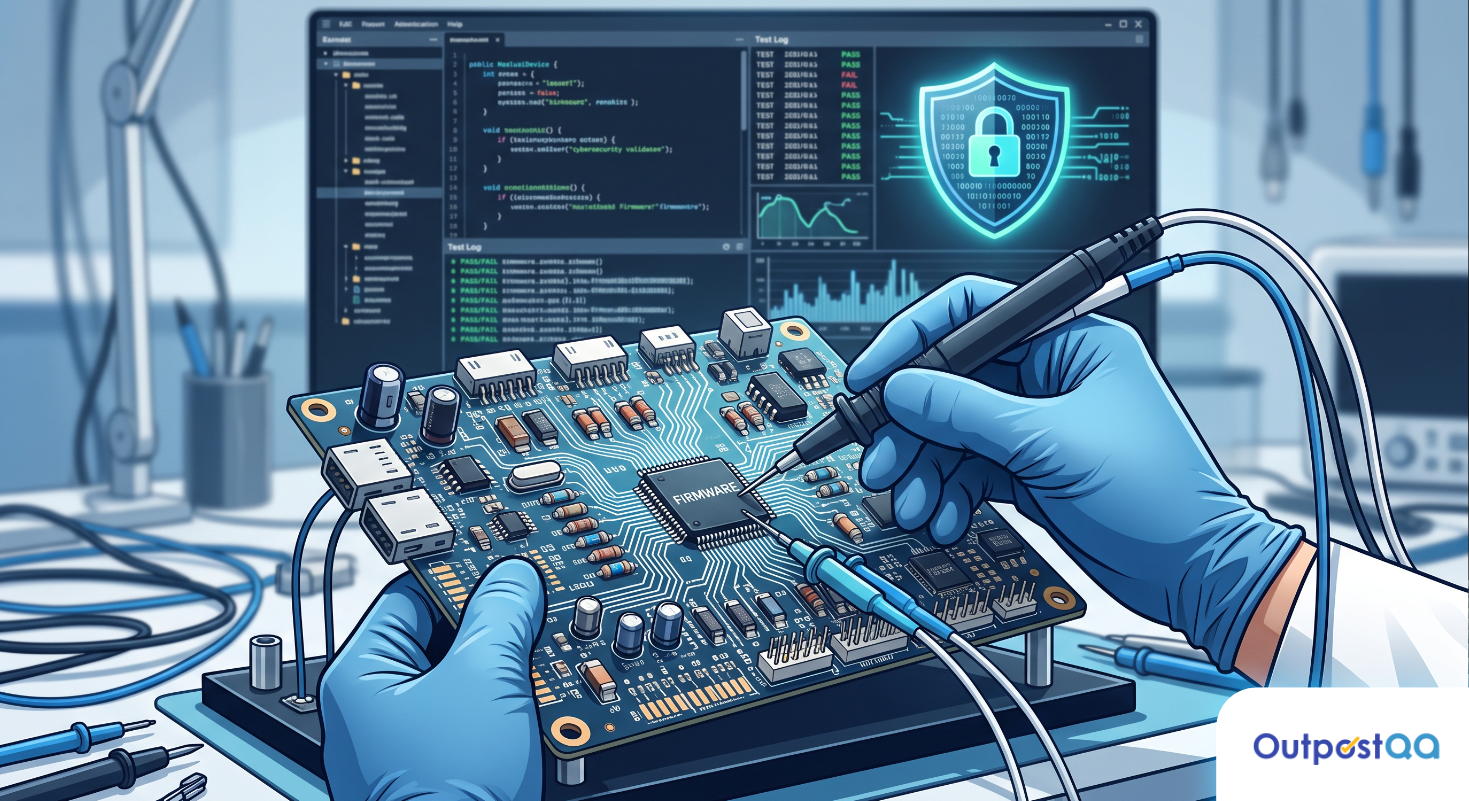
That requires a different release gate design: hardware-in-the-loop (HIL) test stages that run before any firmware or agent update reaches a production instrument. Outpost QA’s Hardware, IoT & Firmware Testing practice handles exactly this kind of multi-layer validation, where the test environment includes physical devices alongside software components.
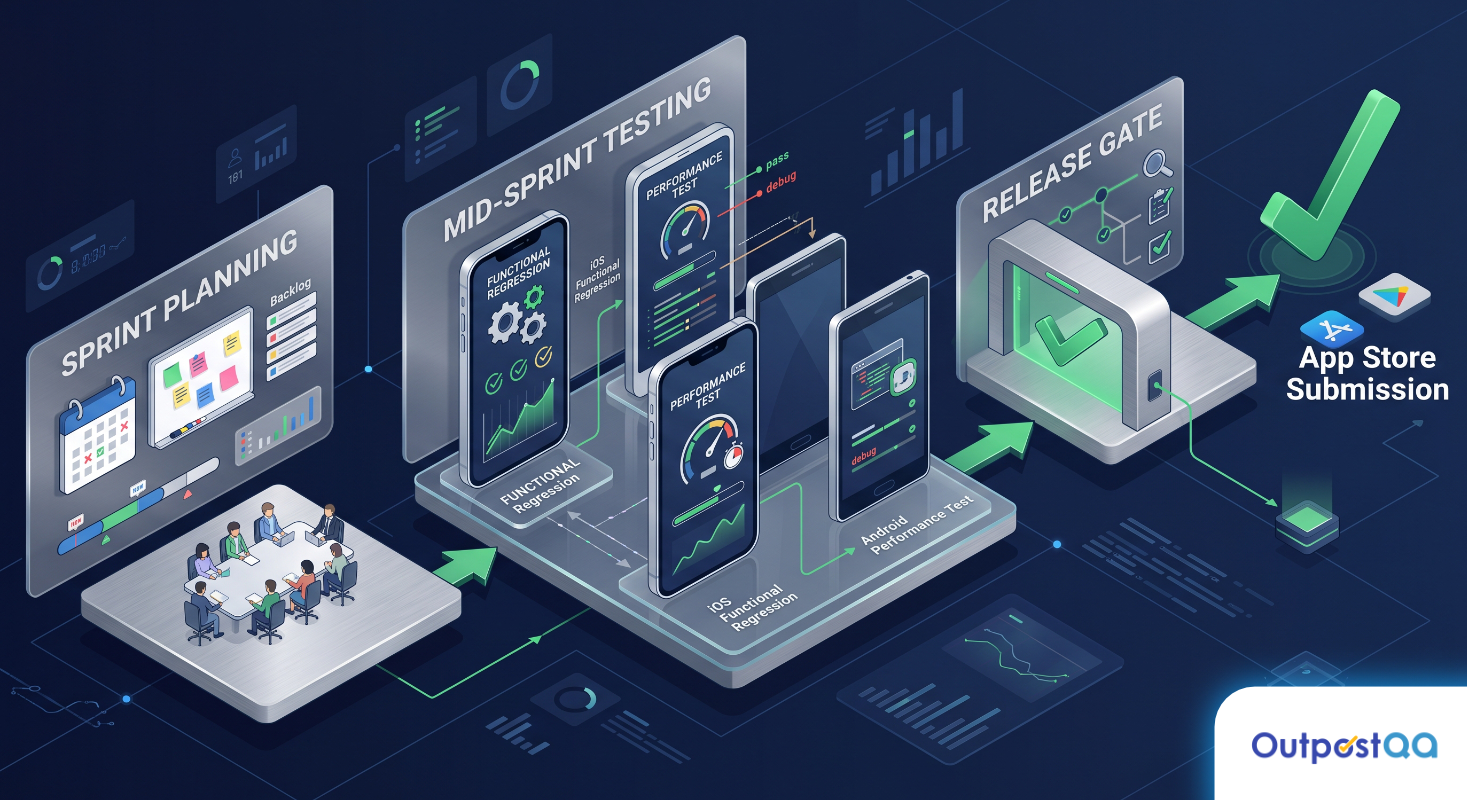
The gate logic for an MHS pipeline needs to treat three update types as independent triggers, each requiring HIL validation before promotion:
- Agent model updates
- Driver updates
- Firmware updates
Safety Evaluations as a Structured QA Deliverable, Not an Afterthought
A safety evaluation for an MHS deployment should be structured the same way a functional test suite is: defined inputs, defined expected outputs, repeatable execution, and clear pass/fail criteria.
Each safety scenario should be a test case that runs as part of the release gate. Examples include a command that would move a robotic arm outside its safe range, or a recovery action that would leave a liquid handler in an unclear state.
Teams that have already built Test Automation & CI/CD pipelines for software can extend the same infrastructure to safety evaluations for physical hardware. The test runner doesn’t change; the test cases do. Safety evaluations aren’t documents that sit outside the pipeline. They’re executable tests that block a release if they fail.
If your team is starting to map test coverage for an MHS deployment or a similar AI-controlled hardware environment, talking through the validation structure early is much easier than building a coverage plan after the first production incident.
Frequently Asked Questions
What is the Model Hardware Standard from Anthropic?
The Model Hardware Standard is a shared specification released by Anthropic that allows AI agents to discover and operate physical lab and manufacturing devices through standardized drivers. It reduces hardware integration time from weeks to hours and enables autonomous multi-instrument operation without custom per-device code.
Which AI agents are compatible with MHS?
MHS is designed to be model-agnostic, though the research preview focuses on Claude agents. The standard is also compatible with the Model Context Protocol, which allows any MCP-compatible agent to use MHS drivers to interact with physical hardware.
What makes testing MHS deployments different from testing standard IoT systems?
Standard IoT testing validates hardware behavior against defined firmware logic. MHS deployments add an AI agent layer that makes autonomous decisions based on hardware state. Test coverage must include the agent’s decision logic, not just the hardware responses. Regression scope must also extend to any workflow the agent touches when drivers or agent logic change.
Do safety evaluations count as QA test cases in an MHS deployment?
Only if they’re structured as executable tests with defined inputs, expected outputs, and repeatable execution. Safety evaluations written as narrative documents outside the pipeline don’t function as release gates and can’t catch regressions when agent logic or drivers are updated.
How should QA teams approach error recovery testing for AI agents controlling physical hardware?
Error recovery testing for MHS agents requires scenario-based test cases that trigger specific fault conditions in a controlled hardware environment. The test must confirm not only that recovery occurred, but that the agent’s recovery path was right for the error class and that the hardware returned to a safe, consistent state after the recovery action completed.