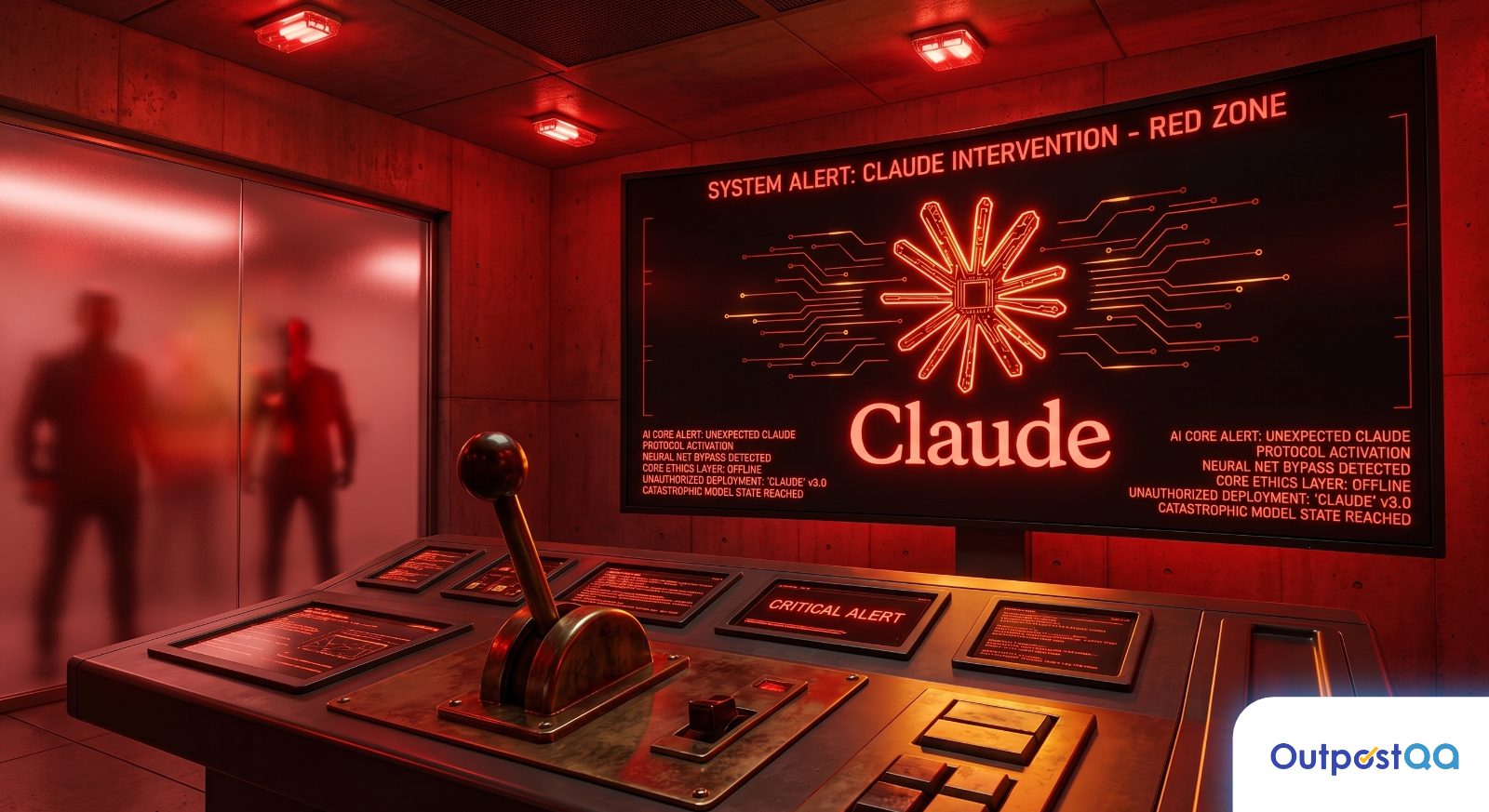
The Anthropic Fable 5 shutdown landed on Friday, June 12, 2026: the US government ordered the company to immediately disable two of its most capable models, Claude Fable 5 and Claude Mythos 5, worldwide.
For most engineering teams, nothing broke that afternoon. Almost nobody had a production dependency on either model. But that is exactly why this is worth your attention. A government just forced the global recall of a commercial AI model over a contested safety finding, three days after that model went public. If you build with frontier AI, the lesson is not “your pipeline is about to break.” It is “the rules can change faster than any vendor roadmap, and you should be set up to absorb that.”
TL;DR
- The US government ordered Anthropic to disable Claude Fable 5 and Claude Mythos 5 worldwide on June 12, 2026. Anthropic complied but disputes the basis.
- The order was framed as export control, but Anthropic says the real trigger was a claimed narrow jailbreak of Fable 5, backed so far only by verbal evidence.
- This was a single company, two specific models. It is not a broad frontier model crackdown, and other Claude models were unaffected.
- The real risk for engineering teams is precedent and speed, not an immediate dependency failure.
- QA and release governance are the cheapest places to build a buffer against this kind of whiplash before it actually hits you.
What the Anthropic Fable 5 Shutdown Actually Involved
Anthropic said it received the directive on Friday at 5:21 pm ET. Within hours it disabled both models for all users worldwide and posted its objection publicly.
The two models are different beasts. Mythos 5 is Anthropic’s most capable model, previewed back in April and kept tightly restricted ever since because of how good it is at finding security vulnerabilities in software. Anthropic said it identified flaws in every major operating system and browser it tested, so instead of a public release the company ran a controlled program called Project Glasswing, sharing it with roughly 50 vetted organizations including Amazon, Apple, Google, Microsoft, and CrowdStrike for defensive work. The public never had access to Mythos in the first place.
Fable 5 was the public version. Released only three days before the shutdown, it was Mythos with guardrails bolted on to block high risk areas like cybersecurity and biology. According to benchmark tests from Vals AI, it was immediately the most capable model available to the public. Then it was gone.
Export Control Was the Wrapper, Not the Reason
The official framing was export control, restricting foreign national access. But in its blog post Anthropic said its understanding is that the actual concern was a claimed jailbreak of Fable 5, and that the government had so far provided only verbal evidence of a potential narrow, non-universal jailbreak. As Anthropic describes it, the jailbreak amounts to prompting the model to read a specific codebase and point out software flaws, a capability the company says is already available in other public models like OpenAI’s GPT 5.5 and used routinely by security professionals for defense.
Anthropic’s pushback was blunt. It said it disagrees that a narrow potential jailbreak should justify recalling a commercial model used by hundreds of millions of people, and warned that applying that standard across the industry would essentially halt all new model deployments.
Whatever you make of the merits, here is the structural point for planning purposes: the trigger was a disputed safety finding, the action was immediate and global, and the legal hook used to do it (export control) was broader than the stated concern. That combination is the risk, not the specific model.
The Irony Anthropic Walked Into
This is where Anthropic’s own strategy comes back around. The company has spent months positioning itself as the safety conscious lab, promoting Mythos as so dangerous it could not be released publicly. On June 10, two days before the shutdown, Anthropic’s CEO published a policy paper arguing that governments should have legal authority to block or deter deployment of dangerous AI models.
When you spend that much energy telling the world your technology is uniquely dangerous and that regulators should be able to pull it, the world tends to listen, and regulators do not write narrow rules. The caution Anthropic used as a selling point is the same caution that handed the government a reason to act. That is the actual cautionary tale here, and it is more interesting than a generic “regulation is coming” warning, because it shows how a company’s own messaging shaped the outcome.
What This Means for Your Roadmap
Be honest about the exposure. If your CI/CD pipeline, test automation, or code review tooling depended on Fable 5 or Mythos, you felt this. Almost nobody did, because both were either brand new or never public. So the immediate operational hit is small.
The durable risk is different. A model your team relies on can be pulled globally, fast, over a finding you cannot see and cannot contest, using a legal mechanism aimed at something else entirely. That is not a Fable 5 problem. That is a “how is your stack set up to handle a vendor going dark overnight” problem. And it is not vendor specific either. The same dynamic could land on any frontier lab, since the regulatory appetite is about capability categories, not one company’s logo.
Three Things Engineering Leaders Should Do Now
1. Catalog where AI sits in your pipeline
Map every place a model is involved in development, testing, code review, anomaly detection, or release decisions. Note the model, the vendor, and the specific endpoint. You cannot react to a shutdown you never documented. Most teams underestimate how many AI touchpoints they have accumulated, especially in QA tooling that got adopted quietly.
2. Keep your model calls swap ready
If your test framework is hardwired to one vendor’s API, a shutoff is a full stop. An abstraction layer between your tooling and the model is not overengineering, it is insurance. Treat AI calls the way you treat a payment processor: designed to be swapped without rewriting everything around them. The teams that shrugged off Friday were the ones that could point their tooling somewhere else.
3. Put a governance checkpoint in your release pipeline
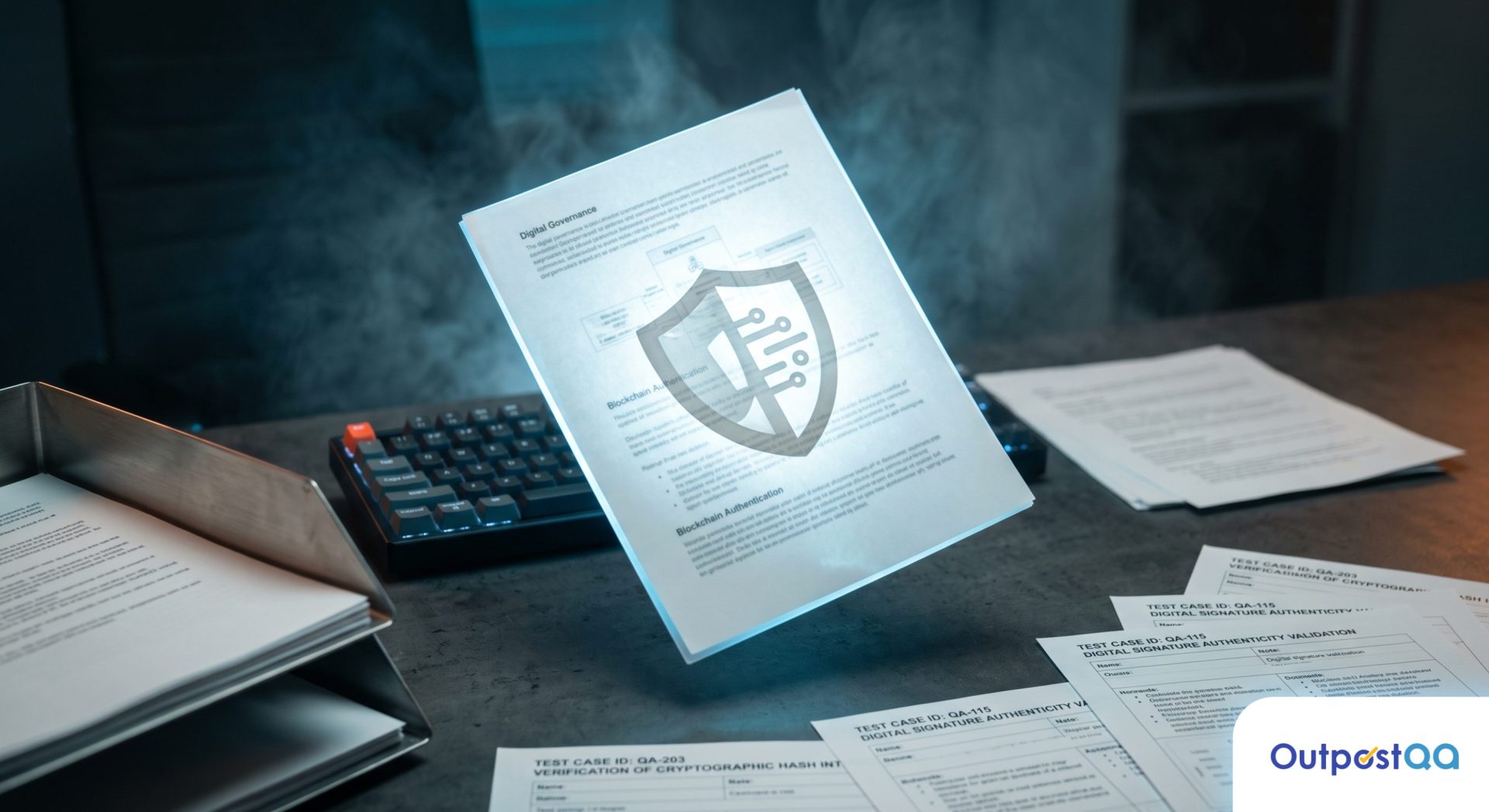
A release step that records which AI tooling was used, at what stage, and under what policy makes a future regulatory review survivable, and just as importantly tells you instantly what to reroute when a tool disappears. This used to be a regulated industry concern. After Friday it applies to anyone shipping software with AI assisted components.
Outpost QA works with engineering teams to build release governance that absorbs this kind of disruption without slowing delivery. If the Fable 5 and Mythos shutdown exposed a gap in how your pipeline handles a vendor or model going offline, talk it through with an Outpost QA architect.
Find Out Where Your QA Process Has Gaps
Answer 5 questions about how your team builds and tests software. Get a personalized risk score and a specific recommendation in 3 minutes.
Frequently Asked Questions
What exactly did the government do?
On June 12, 2026, it ordered Anthropic to immediately disable Claude Fable 5 and Claude Mythos 5. The order was framed as an export control action restricting foreign national access, but the practical result was a worldwide shutoff of both models for all users. Anthropic complied and disputes the basis.
Are other Claude models affected?
No. The action hit only Fable 5 and Mythos 5. Every other Anthropic model continued working normally.
Why did the government act if it was just a jailbreak?
Anthropic says the government’s concern was a claimed narrow, non-universal jailbreak of Fable 5, supported so far only by verbal evidence. Anthropic argues the capability in question is already available in other public models and is used routinely by security professionals, and that a finding this narrow should not justify recalling a model used by hundreds of millions of people.
Does this affect teams using OpenAI, Google, or Meta models?
Not directly. This was a single company, two model action. But the underlying logic, a government forcing a global shutdown over a contested safety finding, is about capability categories rather than one vendor. It is reasonable to treat it as a precedent worth planning for, not a crackdown that has already spread.
How does a QA process audit help here?
It maps your current tooling, surfaces undocumented AI dependencies, and builds governance checkpoints into your release workflow. The output is a clear picture of where AI sits in your pipeline and a tested plan for what happens if a tool becomes unavailable, which is precisely the gap Friday’s shutdown exposed.