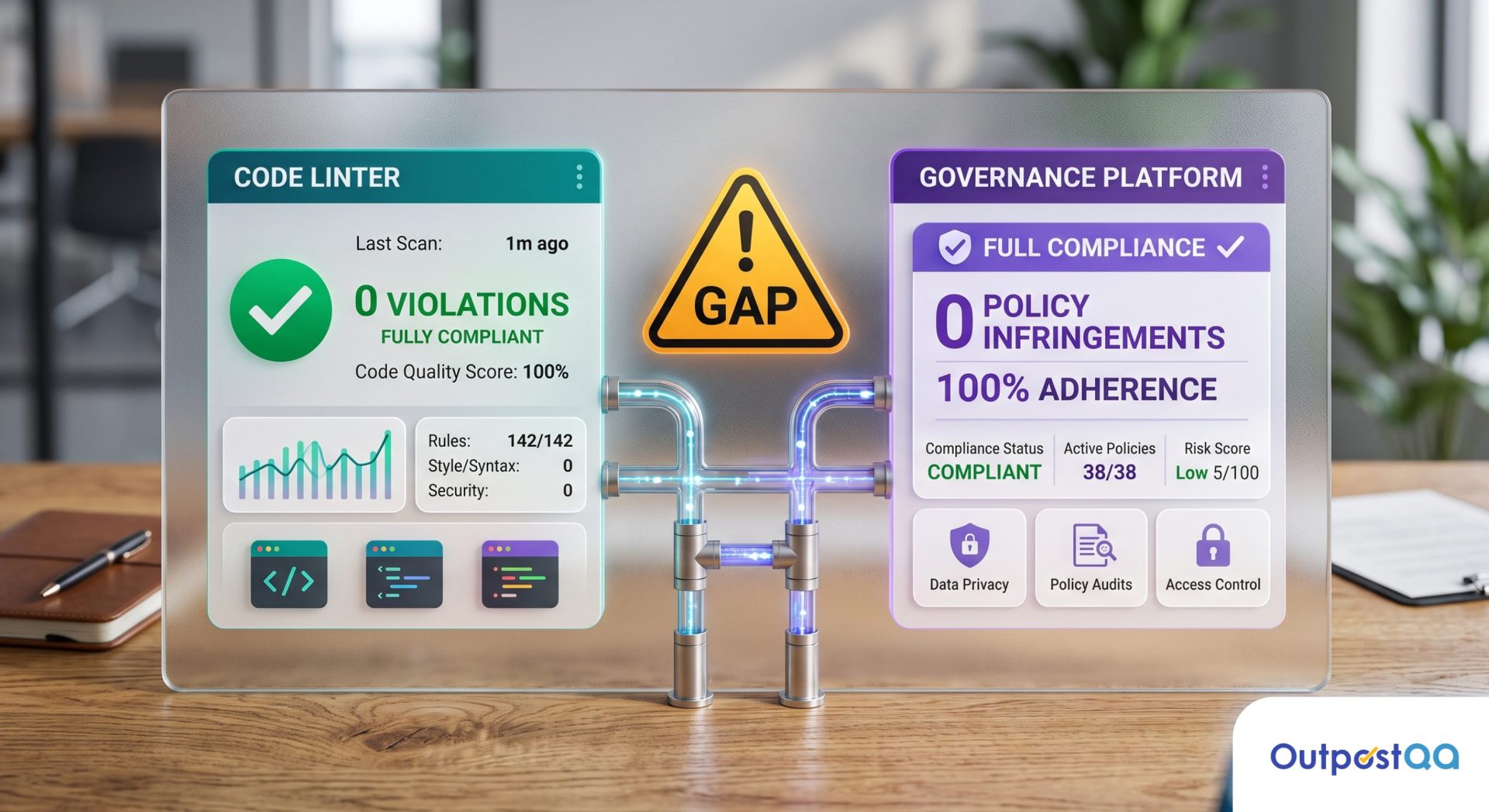
Your developers are shipping code. QA is queued at the end of the sprint. The release date is fixed. When a critical defect surfaces on day twelve of a two-week cycle, everyone already knows what happens next: the developer context-switches back into triage, the release slips, and the velocity number you report to the board takes another hit. Shift-left testing is the structural fix for that pattern.
TL;DR
- Shift-left testing moves QA validation earlier in the development cycle, catching defects at the point where they cost the least to fix.
- Late-stage bug discovery is not a QA problem; it is a pipeline design problem that directly multiplies engineering cost.
- Shift-left testing applies at three concrete layers: the pull request, the CI/CD pipeline, and pre-merge security and accessibility checks.
- A dedicated QA pod is the fastest way to implement shift-left without adding engineering overhead or HR complexity.
- Teams with no automated test infrastructure are not ready to shift left yet; one prerequisite must be in place first.
Shift-Left Testing Defined in Plain Terms
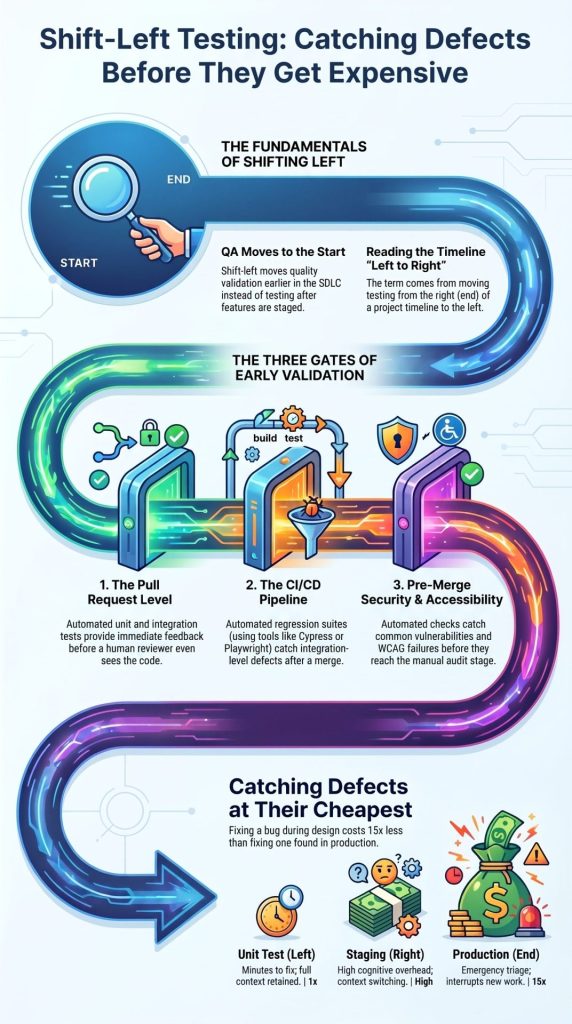
Shift-left testing moves quality validation earlier in the software development lifecycle. Instead of testing after a feature is built and staged, the team validates at the point of code creation: unit tests at the pull request level, automated regression in the CI/CD pipeline, and security checks before a branch merges. The phrase “shift left” comes from reading a traditional project timeline left to right, with development on the left and testing on the right. Shifting left means QA stops being the last step and starts being a continuous layer woven through every stage.
The practical result is that defects are found when they are cheapest to fix, not after they have been integrated into a release candidate and tested against a dozen other features.
When QA Lives at the End of the Pipeline, Everyone Pays
Most engineering teams arrive at a shift-left conversation because something broke badly enough to force it. The trigger is rarely philosophical; it is operational.
How Late-Stage Bug Discovery Multiplies Engineering Cost
A bug caught at the unit test level takes minutes to fix. The developer who wrote the code still has full context. The fix is isolated. A bug caught in staging, after two sprints of integration, requires reconstructing context across multiple contributors, retesting adjacent features, and often pulling in a QA engineer, a developer, and a product manager simultaneously. The IBM Systems Sciences Institute has long cited that defects found in production cost roughly 15 times more to resolve than defects found during design. That multiplier shows up in sprint reports as carryover tickets and in engineering salaries as hours burned on work that adds no new value.
The Velocity Trap: Developers Pulled Back Into Triage
The deeper cost is what late-stage defects do to the people who found the bug. A developer mid-sprint on a new feature who gets pulled back to fix a regression from three weeks ago does not just lose an hour. Context switching between complex problems carries a documented cognitive overhead that can consume the better part of a morning before the developer is fully productive on the original task again. Do that repeatedly across a team and the sprint velocity numbers stop reflecting output capacity; they start reflecting interrupt frequency.
Where Shift-Left Testing Actually Applies in a Real Sprint
Shift-left is not a single practice. It is a set of checkpoints applied at different stages of the development workflow.
Unit and Integration Tests at the PR Level
Every pull request should trigger an automated unit test suite and a set of integration tests that validate the changed code against its direct dependencies. This is the earliest possible quality gate. A developer submitting a PR gets immediate feedback before a reviewer even looks at the code. Failures are small, isolated, and fast to resolve. Teams using GitHub Actions or similar CI triggers can configure this gate in an afternoon; the discipline to maintain and expand the test suite is what requires ongoing attention.
Automated Regression in the CI/CD Pipeline
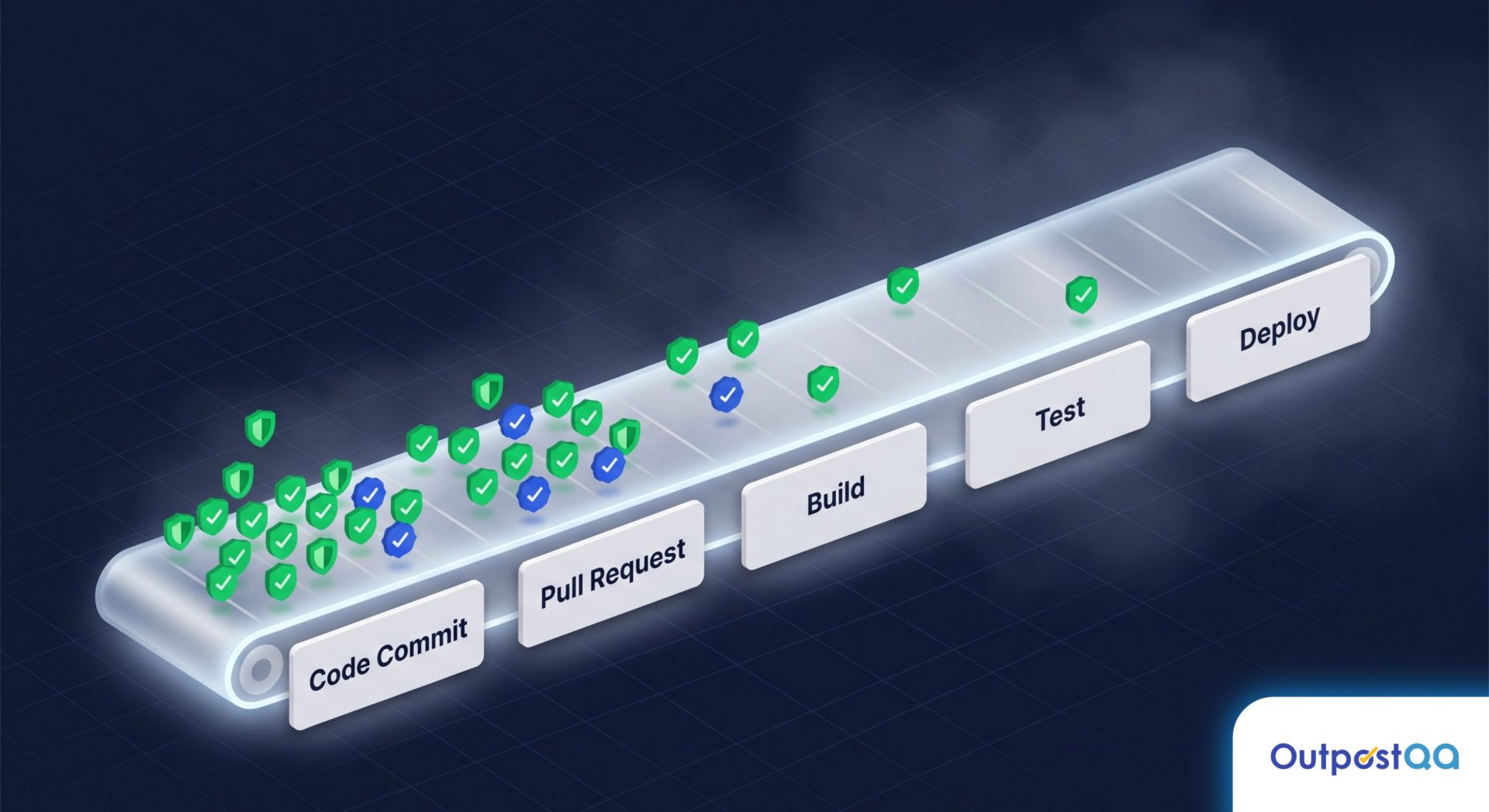
After a PR merges, the full regression suite runs against the updated codebase. This layer catches integration-level defects that unit tests cannot, specifically the cases where two features that work individually break each other when combined. Cypress and Playwright are the dominant frameworks for web regression automation at this layer; both integrate cleanly with most CI/CD systems. The goal is a pass or fail signal that the team trusts enough to gate deployments on, not a flaky suite that everyone has learned to ignore.
Security and Accessibility Checks Before Merge
Security and accessibility validation are two categories most teams defer to a separate audit cycle, usually right before a major release. That deferral is exactly the problem shift-left is designed to solve. Static analysis tools for common vulnerability patterns (SQL injection, exposed secrets, insecure dependencies) can run at the PR level with negligible pipeline overhead. WCAG accessibility checks can be automated for the most common failure categories: missing alt text, insufficient color contrast, and broken keyboard navigation paths. Neither category replaces a deep manual audit, but catching the obvious failures early means the manual audit finds real edge cases instead of the same five issues that keep reappearing. Outpost QA’s accessibility testing and Security and DevSecOps practices are both built to operate at this pipeline layer, not as end-of-cycle add-ons.
Three Signs Your Team Is Ready to Shift Left (and One Sign It Is Not)
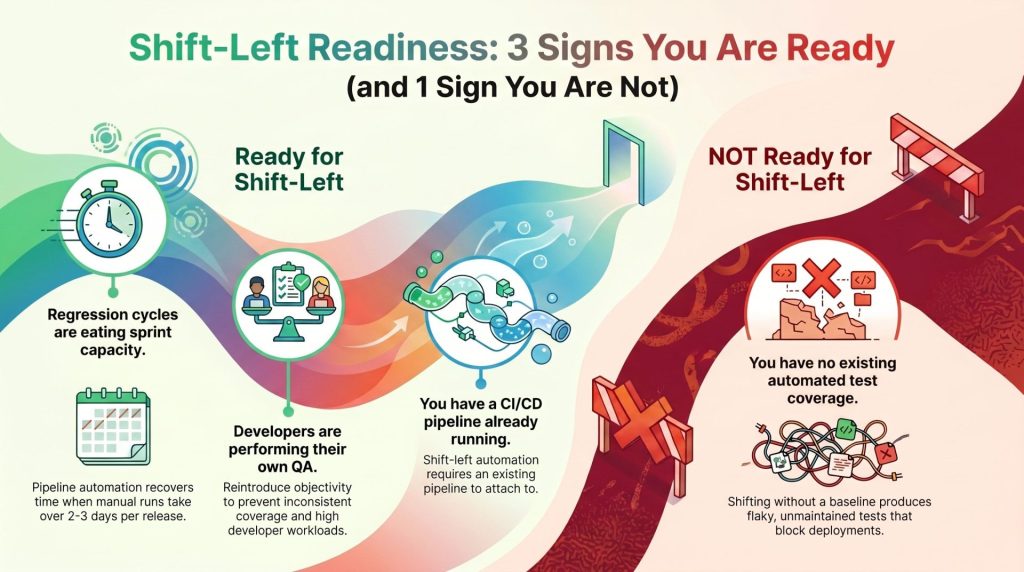
Not every team is in the right position to shift left today. The readiness indicators are specific:
Your team is ready if:
- Regression cycles are eating sprint capacity. If manual regression runs occupy more than two or three days of every release cycle, automation at the pipeline level will recover that time directly.
- Developers are doing their own QA. When engineers are responsible for validating their own code, objectivity disappears and coverage becomes inconsistent. A structured shift-left approach reintroduces a dedicated quality layer without adding to developer workload.
- You have a CI/CD pipeline already running. Shift-left automation requires a pipeline to attach to. If deployments are still manual, pipeline setup is the prerequisite, not shift-left testing itself.
Your team is not ready if:
- You have no existing automated test coverage at all. Shift-left testing accelerates an existing quality practice; it does not replace the foundational work of building one. A team with zero automated tests needs a test strategy and a baseline suite before any shift-left tooling makes sense. Trying to implement shift-left without that foundation produces a pipeline full of flaky, unmaintained tests that block deployments rather than enabling them.
What a Dedicated QA Pod Changes About This Equation
The single biggest obstacle to shift-left adoption is not tooling. It is capacity. Developers cannot build and maintain a comprehensive automated test suite while also shipping new features at pace. Internal QA teams already stretched across manual testing cycles do not have bandwidth to redesign the pipeline architecture at the same time.
A dedicated QA pod solves the capacity problem without adding headcount to the engineering org. The pod handles test architecture, automation framework selection, pipeline integration, and ongoing test maintenance. Developers stay focused on feature work. The QA layer moves left because a team exists whose entire function is to keep it there.
Consider what happened with Flex, a fintech platform managing payment solutions for renters and landlords. Their internal team was building automation but had no capacity for the manual functional testing and frontend validation running in parallel. Developers were absorbing end-to-end testing responsibilities, which created both a bottleneck and a production stability risk. After Outpost QA filled the gap with a dedicated testing pod, the team intercepted over 600 high-priority defects and delivered 50 consecutive flawless weekly releases.
The architecture of shift-left testing is well understood. The gap is almost always execution capacity, not conceptual understanding. If your team knows what needs to happen but cannot find the bandwidth to make it happen, that is the problem a QA pod is built to solve.
If your release cycles are compressing because QA is running at the end of the pipeline instead of through it, talk to a QA architect at Outpost QA about integrating shift-left testing into your existing sprint structure.
Frequently Asked Questions
What is shift-left testing and why it matters for engineering teams?
Shift-left testing moves quality validation earlier in the development cycle, from end-of-sprint manual checks to automated gates at the pull request and CI/CD pipeline level. It matters because defects caught early cost a fraction of what defects caught in staging or production cost, both in developer time and in delayed releases.
Does shift-left testing replace manual QA?
No. Shift-left testing automates the repeatable, high-frequency checks that do not require human judgment: unit tests, regression suites, and static security scans. Manual exploratory testing still covers edge cases, new feature behavior, and scenarios that automated tests cannot reliably simulate. The two approaches work together, with automation handling volume and manual QA handling depth.
How long does it take to implement shift-left testing in an existing sprint cycle?
Teams with an existing CI/CD pipeline and some automated test coverage can typically integrate basic shift-left gates within four to six weeks. Starting from zero automated coverage takes longer because the test suite must be built before it can be shifted. A dedicated QA pod working alongside the existing engineering team can compress that timeline significantly.
What is the biggest mistake teams make when adopting shift-left testing?
Treating shift-left as a tooling decision rather than a capacity decision. Teams install a CI/CD integration, add a few automated tests, and consider the work done. Without someone accountable for expanding, maintaining, and improving the test suite continuously, the automation degrades. Flaky tests accumulate, the pipeline becomes unreliable, and developers start ignoring failures. Sustained shift-left requires dedicated QA ownership, not a one-time setup.
Is shift-left testing only relevant for large engineering teams?
No. Smaller teams often benefit more, because a single late-stage defect represents a larger percentage of sprint capacity when the team is five people instead of fifty. The tooling overhead is the same regardless of team size; the relative impact of catching bugs early is proportionally higher for smaller organizations.