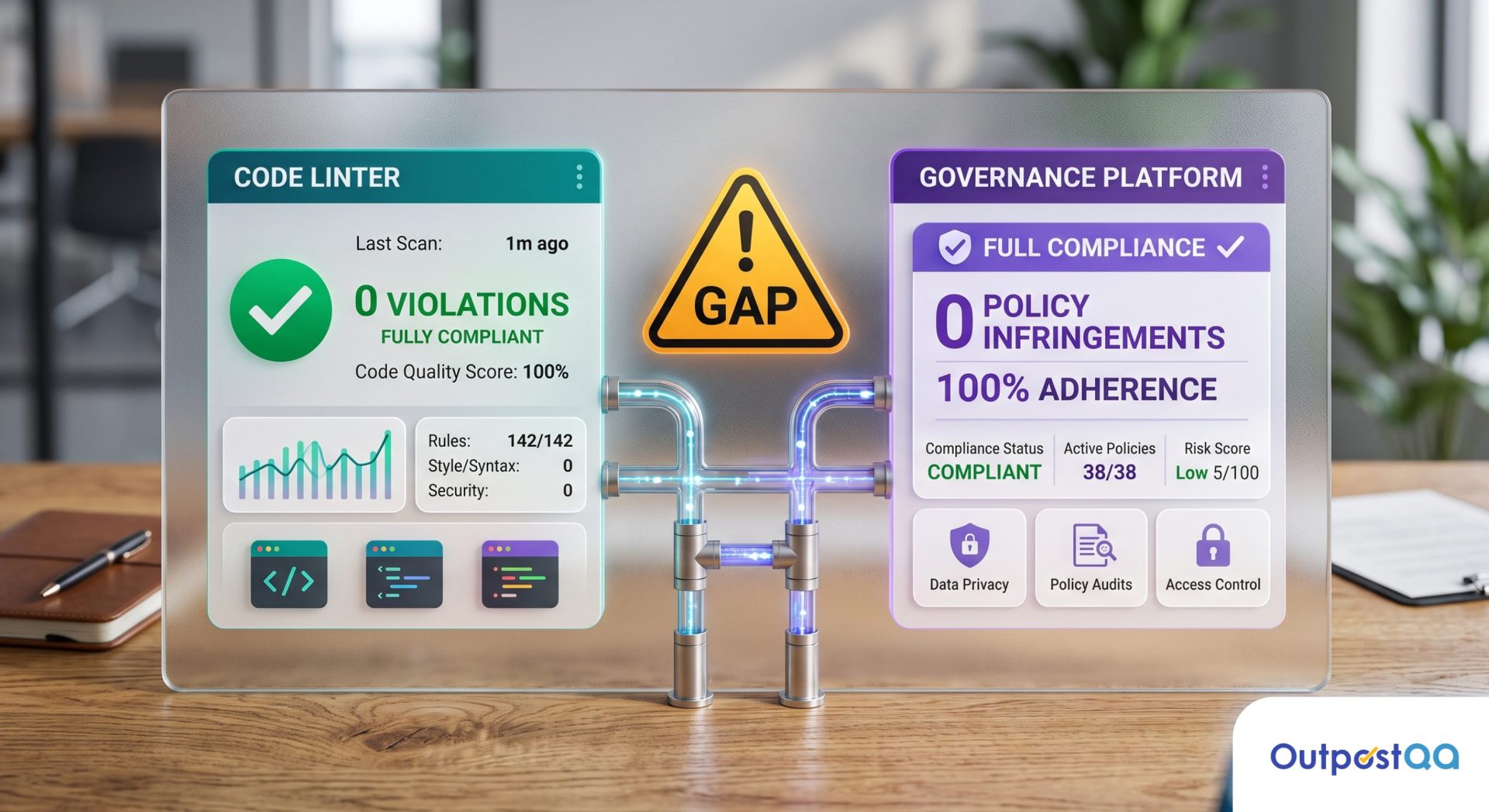

Most QA directors inherit the same mess: a regression suite nobody has touched in six months and functional tests scattered across feature branches with no clear owner. Both disciplines exist on paper. Neither is protecting the release. Understanding the functional testing vs regression testing differences is not the problem; most QA leaders can define each in their sleep. The problem is structural: when ownership is ambiguous, both test types quietly become release blockers instead of safety nets.
TL;DR
- Functional testing verifies that a specific feature meets its requirements; regression testing confirms that existing features still work after a code change.
- The difference is not timing. It is purpose: functional testing validates new behavior; regression testing protects known behavior.
- Regression suites fail when no dedicated owner maintains, prunes, and automates them. That is a structural problem, not a tooling problem.
- Per the 2024 World Quality Report by Capgemini, 44% of organizations cite test maintenance as their top QA challenge, which is exactly the symptom of an unowned regression suite.
- A dedicated QA pod that owns functional coverage in feature branches and regression gates on the main branch eliminates the bottleneck at its root.
What Each Test Type Actually Does
Functional testing answers one question: does this feature do what the requirements say it should do? A tester takes a specific user story, exercises every documented behavior, and flags any deviation. The scope is narrow by design. Each functional test case maps to a defined requirement, which means a passing functional test tells you the new thing works.
Regression testing asks a different question: did anything we already shipped break? The scope is broad. A regression suite exercises features that were not touched in the current sprint because code changes have a habit of introducing silent failures in unrelated parts of the system. A passing regression suite tells you the existing thing still works.
Both are necessary. Neither replaces the other.
Where the Real Difference Lives: Purpose, Not Timing
The most common misconception is that functional testing happens early and regression testing happens late. That framing is not wrong, but it misses what actually matters for a QA director making ownership decisions.
The real functional testing vs regression testing difference is purpose:
- Functional testing: Validates new or modified behavior against a specification. It runs wherever the feature under development lives, typically in a feature branch or staging environment.
- Regression testing: Protects existing behavior from unintended change. It runs as a gate on the main branch, ideally on every pull request merge through a Test Automation & CI/CD pipeline.
That distinction dictates who should own each type, when each should run, and how each should be automated. Functional tests start manual during active feature development, then graduate into the automated regression suite once the feature ships. The regression suite is never static; it grows with every new feature that clears functional validation.
According to the DORA State of DevOps Report, elite-performing engineering teams deploy code multiple times per day with significantly lower change failure rates than low performers. The structural difference is not just automation coverage; it is a clear separation between validating new behavior and protecting existing behavior, enforced continuously in the pipeline.
What Breaks When Nobody Owns the Regression Suite
Consider a twelve-person engineering team shipping on a two-week sprint cycle. Developers write functional tests for each feature they build. Those tests pass. The feature ships. Nobody moves the passing tests into a maintained regression suite, and nobody prunes the tests that are now stale because the underlying feature changed three releases ago.
Six months later, the regression suite takes four hours to run, fails on thirty tests that have not been triaged, and blocks every release for two days of manual investigation. The suite has become the bottleneck. Not because regression testing is flawed, but because no one owns it.
Per the 2024 World Quality Report by Capgemini, 44% of organizations cite test maintenance as their top QA challenge. That number reflects exactly this scenario: suites that grew without governance, accumulated flaky tests without remediation, and now require more effort to manage than they save.
The fix is not a new tool. It is dedicated ownership. A QA pod that owns the regression suite end-to-end: triaging failures, retiring stale cases, automating high-risk paths, and tiering test cases by business impact so the suite runs in thirty minutes instead of four hours. Outpost QA embeds that structure directly into the client’s sprint cycle, and teams like the one behind the Fortune 500 e-commerce case saw release cycles cut in half once QA ownership was separated from developer responsibility.
If your regression suite is blocking releases more than it is catching bugs, that is the signal. Talk to an Outpost QA architect about owning your regression suite end-to-end.
Frequently Asked Questions
What is the main difference between functional testing and regression testing?
Functional testing verifies that a specific feature works according to its requirements. Regression testing confirms that previously working features have not broken after a code change. The scope and purpose differ: functional testing is feature-specific and forward-looking; regression testing is system-wide and backward-looking.
Can functional tests become part of the regression suite?
Yes, and that is exactly how a healthy regression suite grows. Once a feature passes functional validation and ships, its test cases should be reviewed, automated where feasible, and added to the regression suite. Without that handoff process, the regression suite either stagnates or never achieves meaningful coverage.
Should developers or QA engineers own regression testing?
Developers can contribute test cases, but they should not own the regression suite. Developers are too close to their own code to test it objectively, and regression suite maintenance competes directly with feature development time. A dedicated QA team or pod is the right owner because maintenance, triage, and automation are their primary job, not a distraction from it.
How often should a regression suite run?
In a modern CI/CD pipeline, a core regression suite should run on every pull request merge to the main branch. A full regression pass should run before every release candidate. If the suite is too slow to run on every merge, that is a signal the suite needs to be tiered by risk and optimized, not run less frequently.
What happens when the regression suite is never pruned?
It becomes a release blocker. Stale tests that reference deprecated features fail without indicating a real defect. Flaky tests generate noise that engineers learn to ignore. Over time the suite loses credibility, teams start skipping it, and critical regressions reach production undetected.