
If you’re a QA engineer watching headcount shrink and manual-only job postings disappear, you’ve probably heard “manual testing is dead” and also “manual testing will never die.” Both framings are wrong. So is manual testing dead, or isn’t it? The honest answer requires looking at specific testing activities rather than the job title as a whole. Some work is gone. Some work is structurally irreplaceable. Knowing which is which is the only career intelligence that actually matters right now.
TL;DR
- Repetitive regression execution, smoke runs, and form-entry verification are effectively automated and won’t return to human hands.
- High coverage numbers can mask a shallow test suite; a well-run exploratory session often yields more critical bugs per hour than a large passing regression suite.
- Flaky selectors, hardware-in-the-loop scenarios, accessibility verification under real conditions, and exploratory sessions on critical flows still require human judgment.
- The right question isn’t “is manual testing dead in 2026” but “which test types still need a human in the loop, and why.”
- Use a sprint-level decision signal to triage what belongs in an automated suite versus what belongs in a human-driven session.
Is Manual Testing Dead, or Is the Question Just Wrong?
“Is manual testing dead?” is a category error. It mixes up a job title with a set of distinct testing activities that have very different automation profiles. Regression execution and exploratory testing aren’t the same discipline. Smoke runs and accessibility verification under real assistive technology aren’t interchangeable. Treating them as one thing produces a debate that’s too pessimistic about rote execution and too optimistic about everything else.
The QA engineers getting displaced are the ones whose daily work was repetitive execution against a known checklist. The ones who aren’t getting displaced are the ones whose work requires reading ambiguous system behavior, applying domain knowledge, or operating in physical environments that automation can’t reach. The job title “manual tester” covers both groups, which is why the headline debate generates more heat than light.
Which Testing Activities Are Actually Getting Automated Right Now
The displacement is real. According to a case study cited by qa.tech, Pricer reduced its QA team from eight testers to two while simultaneously increasing test coverage after adopting agentic testing tooling. Upsales replaced 320 hours of manual testing with AI agents. These aren’t aspirational projections; they’re outcomes teams have already shipped.
Regression Execution: Mostly Gone
If your job is running the same 200-step regression script against a build before every release, that work is functionally over. Playwright, Cypress, and a growing tier of AI-assisted tools can execute those flows faster and more consistently. They don’t need a human reading pass/fail results line by line. The remaining human role in regression is test design and maintenance, not execution.
Smoke and Sanity Runs: Automated and Good Riddance
Smoke and sanity checks are the easiest case for automation. They’re narrow, deterministic, and run on every commit in any mature CI/CD pipeline. Running them manually was already an engineering smell before agentic tools arrived. If your team is still running smoke checks by hand in 2026, the problem isn’t automation readiness; it’s pipeline discipline.
Form-Entry and Pass/Fail Checklist Verification: Fully Scriptable
Any test that can be expressed as “enter value X, expect result Y” is scriptable. Field validation, error message verification, required-field enforcement, and basic CRUD path coverage all belong in an automated suite. If a human is executing these manually in a sprint cycle, that’s a test design problem masquerading as a staffing decision.
High Coverage Numbers Can Hide a Shallow Test Suite
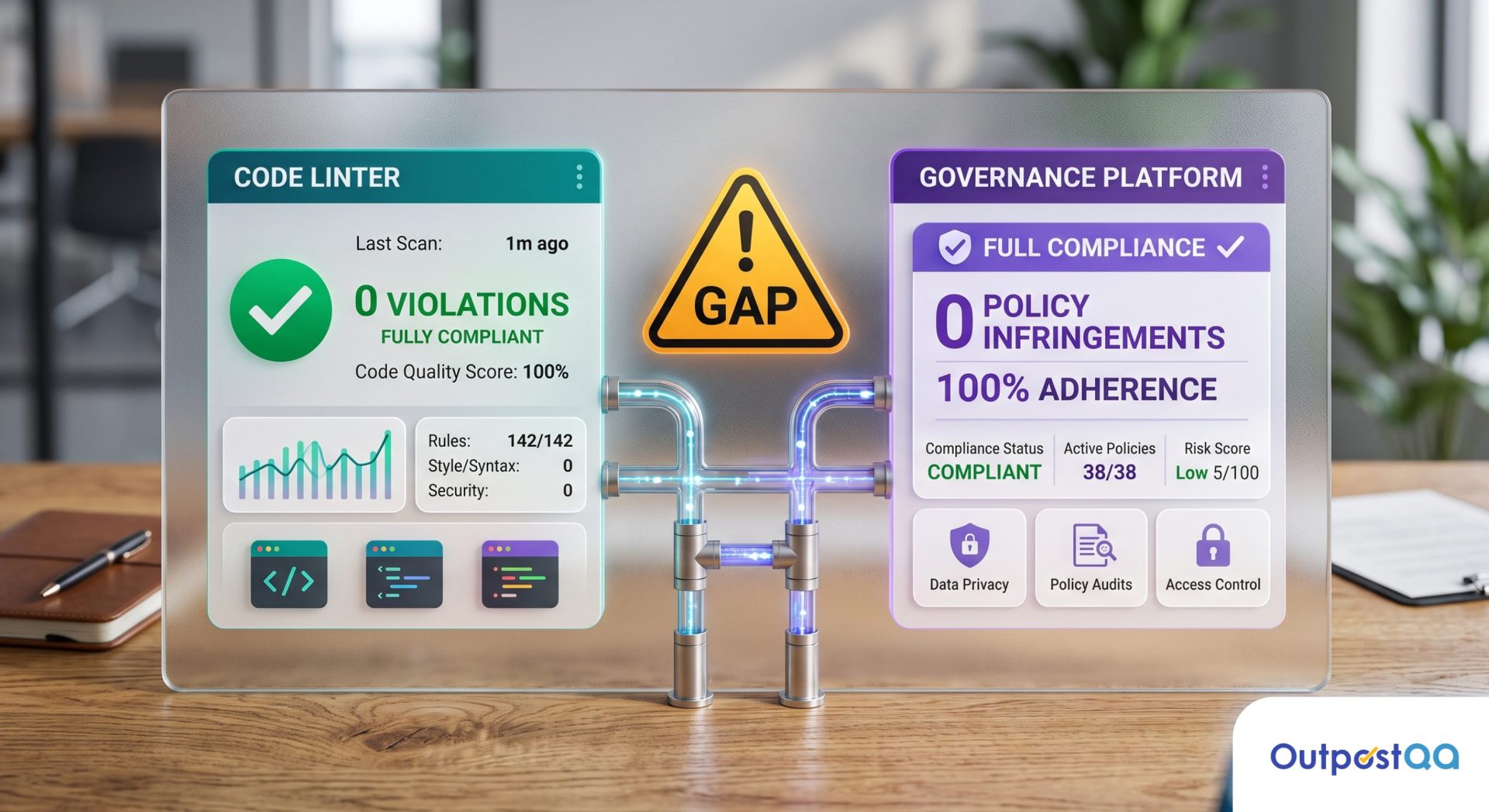
Here’s the insight no vendor blog will tell you: 85% automated coverage isn’t necessarily a sign of a strong quality program. It’s a sign that 85% of your test scenarios are scripted. Whether those scenarios are the right ones is a separate question, and a harder one.
A 2,000-test regression suite that passes cleanly every night can still miss a critical defect in a rarely combined user state. The suite tests what engineers remembered to script, which tends to be the happy path and the obvious error conditions.
A skilled human tester doing a 90-minute exploratory session on a critical user flow, using session-based test management with a focused charter, will often surface edge cases the suite never touches. The test designer simply never imagined them.
This isn’t an argument against automation. It’s an argument against treating coverage percentage as a proxy for coverage quality. The two numbers aren’t the same thing.
Where Automation Still Breaks Down in Production
Flaky Tests and Brittle Selectors in Fast-Moving UIs
If you’ve maintained a large Selenium or Playwright suite against a UI that ships weekly, you know the maintenance tax. Selectors break. Timing assumptions drift. Tests that passed reliably for months start failing when a designer renames a class or an animation changes.
Flaky tests are worse than no tests in one specific way: they train engineers to ignore red builds, which means real failures get normalized.
The human role here isn’t to execute the tests but to audit the suite, kill flaky tests before they poison the signal, and decide what’s worth the selector maintenance burden versus what belongs in a human exploratory session instead.
Hardware-in-the-Loop and Embedded Systems
Every competitor piece arguing that manual testing is dead is implicitly talking about web and mobile apps. That framing excludes a significant slice of the engineering world.
In embedded systems, firmware, and IoT device testing, a human in the loop is often structurally irreplaceable. Physical device interaction, sensor behavior under real environmental conditions, and hardware-in-the-loop scenarios can’t be fully emulated without losing fidelity that matters. A CI/CD pipeline can’t replicate a device dropping a cellular connection on a moving train.
Is Manual Testing Dead for Exploratory Sessions? Not Even Close
Exploratory testing isn’t “clicking around hoping to find a bug.” Done properly, it uses session-based test management: a time-boxed session with a written charter, a specific area of focus, and structured notes that feed into defect clustering analysis.
That discipline requires a human who can recognize when observed behavior is surprising even if it doesn’t fail an assertion. That’s exactly the class of defect that scripted tests are blind to.
Exploratory sessions are highest-value on newly shipped features, on flows that integrate multiple subsystems, and on any area where requirements were ambiguous during development.
Accessibility and Compliance Verification Under Real Conditions
Automated accessibility tools like axe will catch a meaningful percentage of WCAG violations, and you should be running them. They won’t catch everything.
Screen reader behavior across real operating system and browser combinations, keyboard navigation flows that are technically valid but cognitively hostile, and color contrast issues in dynamic content states all require a human tester using actual assistive technology. Compliance frameworks that require documented human verification make this point for you.
A Sprint-Level Decision Framework for What to Automate and What to Keep Human
For every test case, the question your team should answer isn’t “can this be automated?” Almost anything can be automated given enough engineering time. The real question is: does the value of automated execution exceed the cost of building and maintaining the script?
Use these signals to make the call:
- Automate it if the test runs more than twice per release cycle, the expected output is deterministic, the UI or API surface is stable, and the setup cost is recoverable within three sprints.
- Keep it human if the test requires reading ambiguous system behavior, involves physical hardware or environmental conditions, is exploratory by nature, requires genuine assistive technology, or if the selector maintenance burden will exceed the execution savings within a quarter.
- Delete it if the test is already flaky, hasn’t caught a real defect in six months, and the underlying risk is covered by a higher-level test. A smaller, trustworthy suite is more valuable than a large suite with a degraded signal.
Per the 2024 World Quality Report by Capgemini, test environment and data management remain the top obstacles to continuous testing adoption. That suggests many teams are hitting automation ceilings that have nothing to do with tooling and everything to do with test design and infrastructure discipline. Deciding what to test and why is still entirely human work.
If your automation suite hasn’t had a serious audit in the last two quarters, or if exploratory testing time has been squeezed to near zero in favor of coverage metrics, a second pair of eyes on that split is worth the conversation. Reach out to Outpost QA and we can review your current automation coverage and exploratory testing posture together, engineer to engineer.
Frequently Asked Questions
Is manual testing dead in 2026?
Specific manual testing activities, particularly repetitive regression execution, smoke runs, and pass/fail checklist verification, are effectively automated and unlikely to return to human hands. However, exploratory testing, hardware-in-the-loop scenarios, accessibility verification under real assistive technology, and test design work all still require human judgment. The job category is shrinking; the discipline is not gone.
What types of testing still require a human tester?
Exploratory testing on complex user flows, accessibility verification using real assistive technology, hardware and firmware testing involving physical device interaction, and any scenario where the definition of “correct” behavior is ambiguous rather than deterministic all benefit substantially from human involvement. These are also the test types where automation coverage numbers are least meaningful as a quality signal.
Will AI replace QA engineers entirely?
Agentic AI tools are accelerating the automation of execution tasks, and some teams have already reduced headcount as a result. What AI cannot currently replace is the judgment required to design meaningful tests, recognize surprising behavior that does not trip an assertion, or operate in physical environments. The engineers most at risk are those whose daily work is rote execution against a static checklist.
What is session-based test management?
Session-based test management is a structured approach to exploratory testing. A tester defines a time-boxed session with a written charter describing the focus area, executes the session, and documents findings including bugs, questions, and areas that need further investigation. It gives exploratory testing the structure needed to be repeatable and auditable without converting it into scripted execution.
How do I decide what belongs in my automated suite versus a manual session?
Automate tests that are deterministic, run frequently, and operate against a stable surface where the selector or API maintenance cost is recoverable quickly. Keep human-driven sessions for new features, critical flows with ambiguous requirements, accessibility scenarios, and any area where your automated suite has historically missed defects despite passing. Audit and prune your suite regularly; flaky tests that train engineers to ignore red builds are actively harmful.